
The court was hearing a plea by the Anjuman Intezamia Masjid committee seeking permission for wazu at the mosque complex in Varanasi during the month of Ramzan.
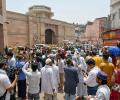
A fresh plea seeking permission to worship the "Shivling" claimed to have been found on the mosque premises during a videography survey ordered by a lower court was also filed.
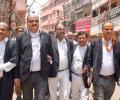
'As per the orders of the court, the videography survey of the Gyanvapi Masjid complex took place from May 14 to May 16 from 8 am to 12 noon, and its report was to be submitted to the court'
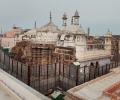
The Supreme Court on Monday agreed to hear on April 14 a plea by the Anjuman Intezamia Masjid committee seeking permission for wazu (ritual ablution) at the Gyanvapi mosque complex in Varanasi during the month of Ramzan.
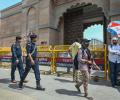
District Judge A K Vishvesh ordered that it would continue to hear the petition seeking the right to worship in the temple.
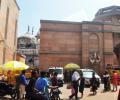
Hindu petitioners had during a court-mandated videography survey of the mosque premises claimed that a 'Shivling' was found close to the 'wazookhana', a small reservoir used by Muslim devotees to perform ritual ablutions before offering the namaaz.
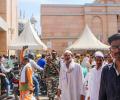
The Act prohibits conversion of any place of worship and provides for the maintenance of the religious character of any place of worship as it existed on August 15, 1947.
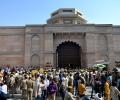
Singh said the court also gave a week's time to both Hindu and Muslim sides to file objections to the report of a court-mandated videography survey of the Gyanvapi mosque premises.
A bench of Justices D Y Chandrachud, Surya Kant, and P S Narasimha made the important observation during an hour-long hearing of the Gyanvapi mosque dispute and said that it has dealt with provisions of the Places of Worship Act in its 2019 Ayodhya verdict and section 3 does not expressly bar ascertaining of the religious character of the place of worship.
At present the people are allowed to worship once in a year only, he submitted before the court.
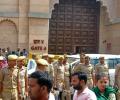
Shivling claim is an attempt to create communal disharmony, The All-India Muslim Personal Law Board said.
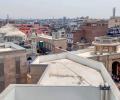
The Allahabad high court on Tuesday extended the interim stay till September 30 on a Varanasi court order directing the Archaeological Survey of India to conduct a physical survey at the Kashi Vishwanath temple-Gyanvapi mosque complex and further proceedings in this case.
Madan Mohan Yadav, an advocate of the Hindu side, claimed the survey team found a Shivling in the complex near 'wazookhana'
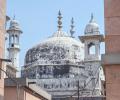
District Judge AK Vishvesha turned down the Hindu petitioners' plea seeking scientific investigation and carbon dating of the 'shivling', citing Supreme Court directives for its safe keeping so that no tampering can be done.
The Supreme Court of India is scheduled to hear a batch of petitions challenging the validity of certain provisions of the Places of Worship (Special Provisions) Act, 1991, which prohibits lawsuits to reclaim a place of worship or change its character from what prevailed on August 15, 1947. The pleas, including one filed by Ashwini Upadhyay, argue that these provisions violate the right to judicial remedy and create an arbitrary cut-off date. The matter will be heard in the backdrop of several ongoing cases related to places of worship, including the Gyanvapi Mosque in Varanasi and the Shahi Idgah Mosque in Mathura. The Muslim side has cited the 1991 law to argue that such suits are not maintainable. The Supreme Court had previously sought the Centre's response to Upadhyay's petition, which alleged that the law creates an "arbitrary and irrational retrospective cut-off date" for maintaining the character of places of worship.
A lawyer has filed an intervention application in the Supreme Court seeking impleadment in the Gyanvapi mosque case, stating that a mosque constructed on temple land cannot be a mosque.
A commission appointed by a court in Varanasi to conduct a videographic survey of the Kashi Vishwanath temple-Gyanvapi Mosque complex submitted its report on Thursday, an advocate said.
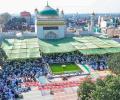
The law prohibits conversion of any place of worship and provides for the maintenance of the religious character of any place of worship as it existed on August 15, 1947.
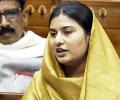
Samajwadi Party leader and Kairana MP Iqra Choudhary has moved the Supreme Court seeking effective implementation of the Places of Worship (Special Provisions) Act, 1991. This move comes amidst several petitions challenging the law's validity, including those filed by the Akhil Bhartiya Sant Samiti and lawyer Ashwini Upadhyay. The Supreme Court, in December 2022, had restrained all courts from examining fresh suits and passing interim orders in pending cases seeking to reclaim religious places. The Act aims to maintain the religious character of places of worship as they existed on August 15, 1947, but the dispute relating to Ram Janmabhoomi-Babri Masjid at Ayodhya was kept out of its purview. The court has listed Choudhary's plea with other pending pleas for February 17.
A bench of Justices D Y Chandrachud, Surya Kant, and P S Narasimha said that it is posting for October first week hearing on the appeal of Gyanvapi mosque committee's plea against the Allahabad high court order upholding the appointment of court commissioner to survey the site.
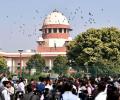
A bench comprising Chief Justice Sanjiv Khanna and Justice Sanjay Kumar also indicated that it may not take up the pending scheduled petitions, heard earlier by a three-judge bench, during the day as it was sitting in a combination of two judges.
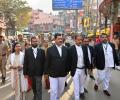
A Varanasi court, which had ordered the videography survey of the Gyanvapi mosque complex, on Tuesday removed advocate commissioner Ajay Mishra on grounds of non-cooperation, an official said.

The Bharatiya Janata Party's action against its two members for their controversial comments against Prophet Mohammed cap a series of statements from its top brass and also Rashtriya Swayamsevak Sangh chief Mohan Bhagwat that sought to distance their organisations from shrill and combative religious rhetoric, even as it has brought to fore the conflict within their wide sphere of support.
The Supreme Court ordered on Monday that no invasive work would be undertaken by the Archaeological Survey of India (ASI) to determine if the Gyanvapi mosque located next to the Kashi Vishwanath temple in Varanasi was built upon a temple and agreed to hear a plea moved by the mosque committee during the day.

A bench of Justices DY Chandrachud, Surya Kant, and PS Narasimha said that it is not casting any aspersion on the civil judge (senior division) who was earlier dealing with the suit.
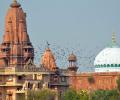
On the recent decision allowing survey of the Gyanvapi mosque, Madani said, "We have no objection to the survey. We believe that if the survey is conducted honestly, nothing will come out of it."
The Mathura Shahi Masjid Eidgah Committee has approached the Supreme Court, requesting the court to prevent the central government from filing a response to a petition challenging the Places of Worship Act's constitutional validity. The committee accuses the BJP-led government of intentionally delaying its response. The court had previously issued a notice to the government in March 2021, but the government has yet to submit its reply despite numerous opportunities. The committee argues that the government's delay is intended to obstruct those opposing the challenge to the Places of Worship Act from filing their own responses. The petition also states that the pleas challenging the law's validity are scheduled for hearing on February 17, and closing the government's right to respond would serve justice. The Supreme Court previously issued a ruling in December 2022 that stopped courts from entertaining new lawsuits or issuing interim or final orders regarding the reclaiming of religious places, particularly mosques and dargahs. The ruling halted proceedings in 18 lawsuits filed by Hindu groups seeking surveys to confirm the original religious character of 10 mosques, including the Gyanvapi Masjid in Varanasi, the Shahi Idgah Masjid in Mathura, and the Shahi Jama Masjid in Sambhal. This decision was made in response to six petitions, including one filed by lawyer Ashwini Upadhyay, challenging various provisions of the Places of Worship Act. The 1991 law prohibits the conversion of places of worship and guarantees the preservation of their existing religious character as it stood on August 15, 1947. Notably, the dispute regarding the Ram Janmabhoomi-Babri Masjid in Ayodhya was excluded from this law. There are also several cross-petitions advocating for a strict enforcement of the 1991 law to uphold communal harmony and maintain the current status of mosques that Hindu groups seek to reclaim, claiming they were temples before being destroyed by invaders.

'It was a disaster on his part to give an oral remark which allowed ascertainment of the religious character of places of worship.' 'This disrupted the social harmony of the country.'
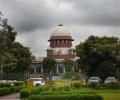
Commencing hearing on pleas challenging the constitutionality of the Places of Worship Act, 1991, the Supreme Court asked the Centre to reply to cross-pleas against or seeking implementation of statute.

Underlining the Bharatiya Janata Party's commitment to cultural development of the country, party president J P Nadda on Monday said that contentious religious matters would be decided by "courts and the Constitution" and the party would implement the decisions in letter and spirit.

Uttar Pradesh Chief Minister Yogi Adityanath appeared to make a pitch in the assembly for a temple where a mosque stands now in Mathura, saying that Krishna Kanhaiya wouldn't have it any other way.
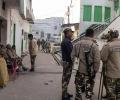
A four-member team from the Archaeological Survey of India (ASI) conducted a survey of the recently-discovered Shri Kartik Mahadev temple, five pilgrimage sites, and 19 wells in Sambhal, Uttar Pradesh, India. The survey followed the discovery of three damaged idols inside a well of the Bhasma Shankar temple, which was reopened after being shut for 46 years. The Shri Kartik Mahadev temple, also known as the Bhasma Shankar temple, was reopened on December 13 after authorities found the covered structure during an anti-encroachment drive. The temple houses an idol of Lord Hanuman and a Shivling and had remained locked since 1978. The district administration has requested carbon dating of the temple, including the well, from the ASI. Meanwhile, the Supreme Court has restrained courts across India from entertaining new lawsuits or passing any orders in pending ones seeking to reclaim religious places, especially mosques and dargahs, until further notice. This action halts proceedings in approximately 18 lawsuits filed by Hindu parties seeking surveys to determine the original religious character of 10 mosques, including the Gyanvapi at Varanasi, the Shahi Idgah Masjid at Mathura, and the Shahi Jama Masjid at Sambhal, where four individuals died in clashes. The Supreme Court will examine the legality, scope, and boundaries of the Places of Worship (Special Provisions) Act, 1991, which prohibits the conversion of places of worship and ensures the preservation of their religious character as it existed on August 15, 1947.
The Places of Worship Act is 'An Act to prohibit conversion of any place of worship and to provide for the maintenance of the religious character of any place of worship as it existed on the 15th day of August 1947, and for matters connected therewith or incidental thereto'.
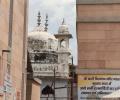
Rediff.com's Utkarsh Mishra visits the Kashi Vishwanath-Gyanvapi mosque in Varanasi, which is fast being turned into another mandir-masjid dispute.

Justice Padia stayed the Varanasi civil court order, ruling that the subordinate court passed its order ignoring the fact that the high court had reserved its verdict on the plea challenging the maintainability of the suit which had been filed earlier in the lower court for the survey.
The Jammu and Kashmir police on Friday arrested social activist Waqar H Bhatti for allegedly hurting religious sentiments with his Shivling tweet which caused social media outrage.

A local court in Ajmer has issued notices to the dargah committee, the Ministry of Minority Affairs, and the Archaeological Survey of India on a plea seeking to declare the shrine of Sufi saint Khwaja Moinuddin Chishti a temple. The petition, filed in September, has sparked a heated debate, with politicians and community leaders weighing in on the potentially volatile issue. The dargah committee has declined to comment, but the Anjuman Syed Zadgan, a body representing the caretakers of the dargah, described the petition as a deliberate attempt to fracture society along communal lines. The petition comes just days after four people were killed in Sambhal, Uttar Pradesh, following a local court ordering survey of a Mughal-era shrine. The Places of Worship (Special Provisions) Act, 1991, which fixed August 15, 1947, as the cut-off date for status quo on the character of religious places, is at the centre of much of the debate. Several politicians, including Union minister Giriraj Singh and PDP chief Mehbooba Mufti, have weighed in on the issue. The Communist Party of India (Marxist) has called the civil court's decision to entertain the petition unwarranted and has asked the Supreme Court to immediately intervene.

After a meeting of its working committee in New Delhi, the board adopted a resolution which stated that the recent judgment of the Supreme Court on the maintenance of Muslim divorcee women is "against the Islamic law (Shariah)".
'Why were they silent when over 128 temples and shrines including Shivlings were broken down at the time of the construction of the Kashi Vishwanath corridor?' a Varanasi resident asks Rashme Sehgal.

He could have blazed a trail that few Indian judges had. It was a missed opportunity of a lifetime, notes Ramesh Menon.
